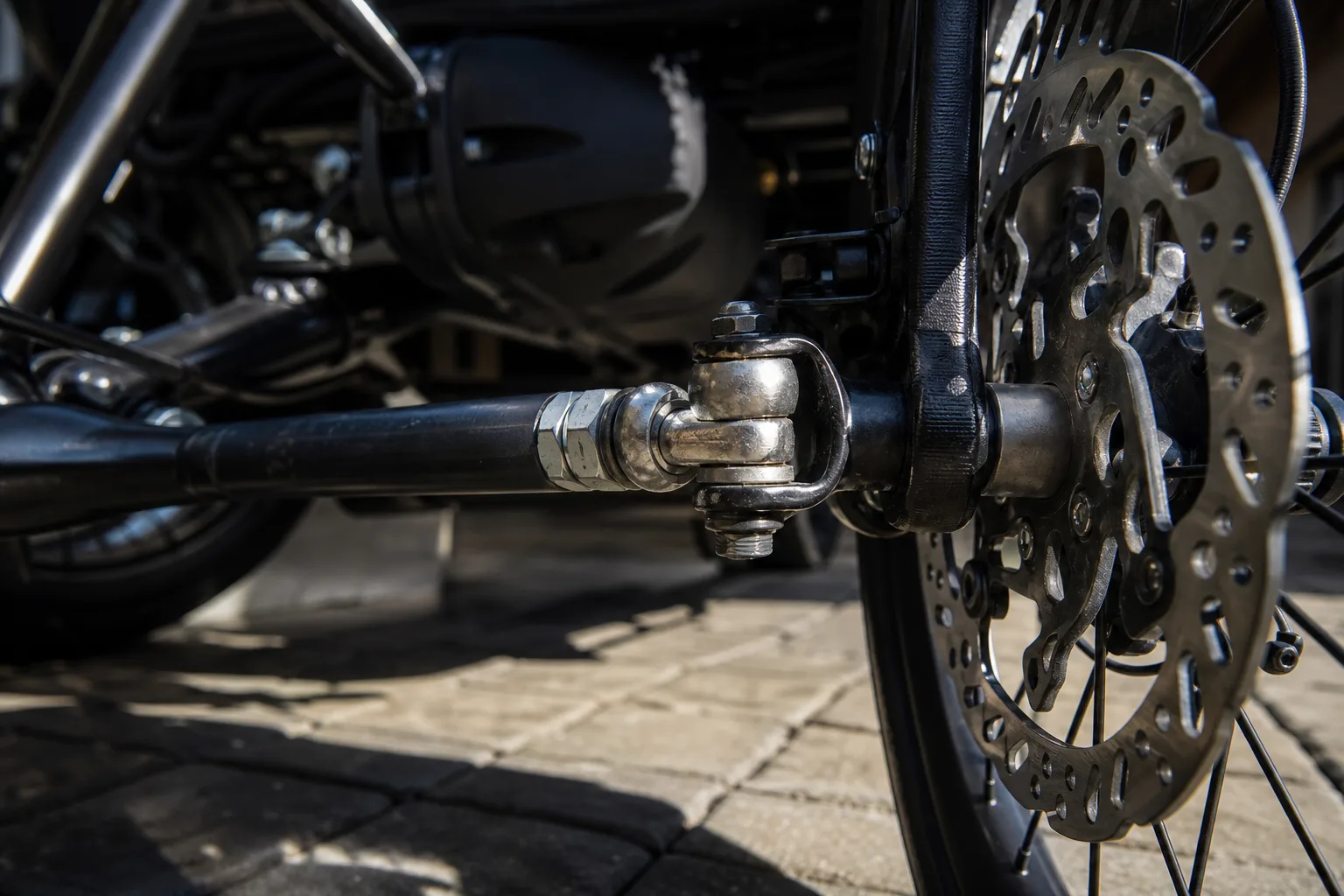
The choice between two wheels at the back and two at the front decides more about daily life with a trike than motor wattage or battery capacity ever will. A delta, with the single wheel steering up front and the pair driving behind, sits tall and turns like a shopping cart. A tadpole, with two steered wheels ahead and one driven wheel behind, sits low and turns like a small car. Both carry an electric assist happily. What separates them is geometry, and geometry is what a driveway, a side gate, and a shed door enforce.
Turning circle, measured where it matters
Manufacturers publish a turning radius when they publish one at all, and the figure is usually taken on open pavement with the handlebars at full lock. That number is honest and not very useful. What a careful reader wants is the swept width of the whole machine through a U-turn, because the rear track on a delta describes a much wider arc than the front wheel that initiated it. Deltas typically need a generous apron or a two-point turn on a standard residential driveway. Tadpoles pivot around a rear wheel that follows closely, which is why they often reverse direction inside a single car width.
Tipping speed, and why the low one wins corners
Three-wheeled cycles lift a wheel rather than sliding out, and the speed at which that happens is a function of track width divided by center of gravity height. A delta places the rider high, often above the axle line, so the inside rear wheel can unweight at a walking-brisk pace on a tight turn, particularly with a loaded rear basket. A tadpole puts the rider's hips near the height of the wheel hubs, and the two steered wheels are ahead of the mass, so it corners flat at speeds that would unsettle the taller layout. Riders on either can extend the margin by braking before the turn rather than in it, and by keeping cargo low and centered.
Seat height, and the business of getting on and off
Nothing about a spec sheet predicts this as poorly as the phrase step-through frame. On a delta, the seat is usually somewhere between a kitchen stool and a dining chair, so mounting is a matter of stepping over a low top tube and sitting down, and dismounting is standing up. Riders with hip, knee, or balance limitations generally find this the easier motion, which is the layout's most persuasive argument. A tadpole seat sits far lower, sometimes below the knee, and getting out requires pushing up from a reclined position with hands on the frame or seat edge. Many riders adapt quickly, and some fit a slightly raised seat pan or a grab handle to make the motion routine.
The 30-inch gate and the shed door
Overall width is the specification to write down before anything else, and it is measured tire outside to tire outside, not hub to hub. Adult deltas commonly run wider than a 30-inch gate opening, though some are narrower at the rear than they look, and a few use a folding or narrowing rear axle. Tadpoles vary widely, with performance-oriented models often built narrow enough to clear a standard doorway and touring models built wider for load stability. A folding tadpole that hinges at the boom will usually pass through a gate on its side wheels with the seat removed. Measure the gate at its narrowest point, including the latch hardware and hinge stack, then measure the shed door and the shed itself, because a trike that enters straight may not be able to turn once inside.
What a careful reader checks before committing
Ask for the width at the widest tire, the turning radius with the swept envelope described, the seat height to the top of the cushion, and the empty weight as shipped with battery. Take the machine through the actual gate, not a similar one, and try the mount and dismount five times rather than once, since the fifth attempt is the honest one. The Consumer Product Safety Commission oversees bicycle equipment requirements in the United States, and reputable sellers will speak plainly about which standards a given frame and brake set were built to. Storage plans deserve the same rigor: a wall hook, a bike cover, or a widened gate post are all cheaper than discovering the problem after delivery.
Both layouts work, and thousands of riders are happy on each. The delta trades cornering margin for an easy sit-down mount and an upright view of traffic; the tadpole trades an easy exit for stability and a smaller footprint in tight spaces. The right answer is the one that fits the path from the street to where the machine will sleep.